 Session 1
Advances in viticulture
Climate adaptation, crop health and regenerative vineyard systems
Read more →Programme
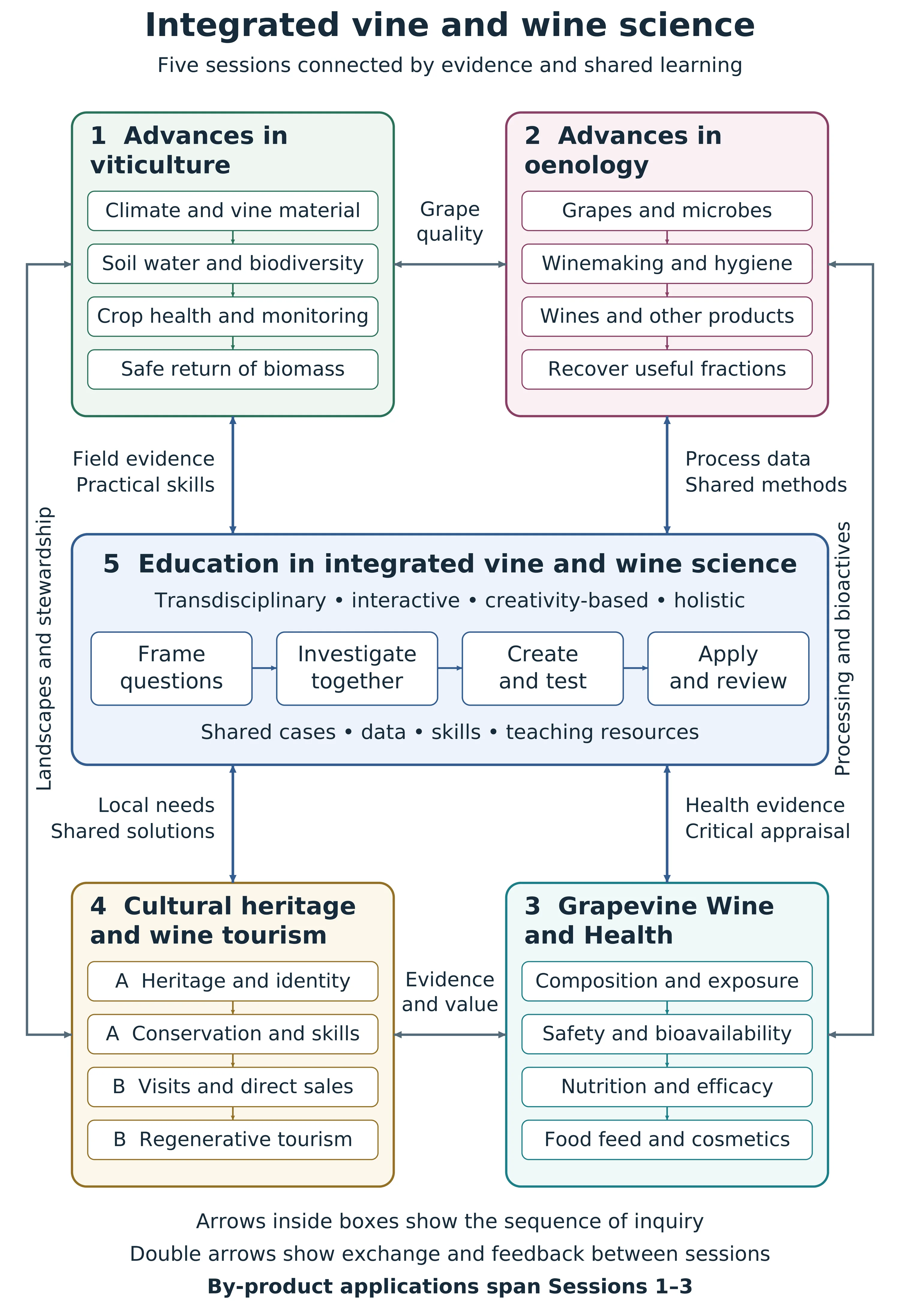
The Congress comprises five connected scientific sessions covering the vineyard, winemaking, health, cultural heritage and tourism, and education. By-product valorisation is embedded in Sessions 1–3 according to its intended application. Session 4 contains two distinct subsessions. Session 5 connects the whole programme through transdisciplinary learning and the joint development of practical solutions.
Wine economics will be addressed at a separate conference scheduled for 8–11 June 2027. Here, short economic justifications explain the feasibility of particular technologies, products and visitor services; they do not constitute an additional session.
Session 1Climate adaptation, crop health and regenerative vineyard systems
Read more →
 Session 2
Wine quality, process innovation and product diversification
Read more →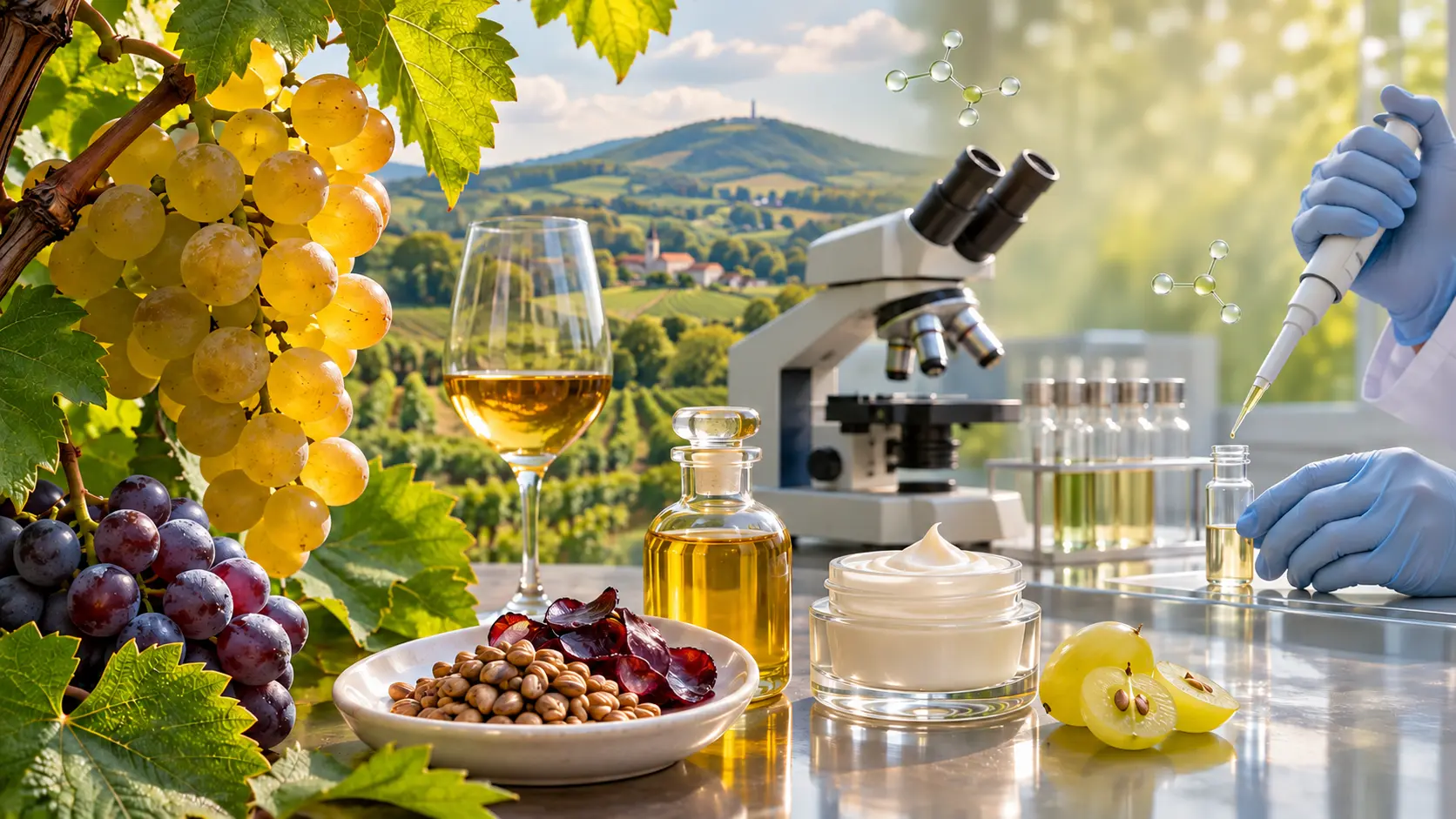
 Session 3
Composition, safety, efficacy and health-related applications
Read more →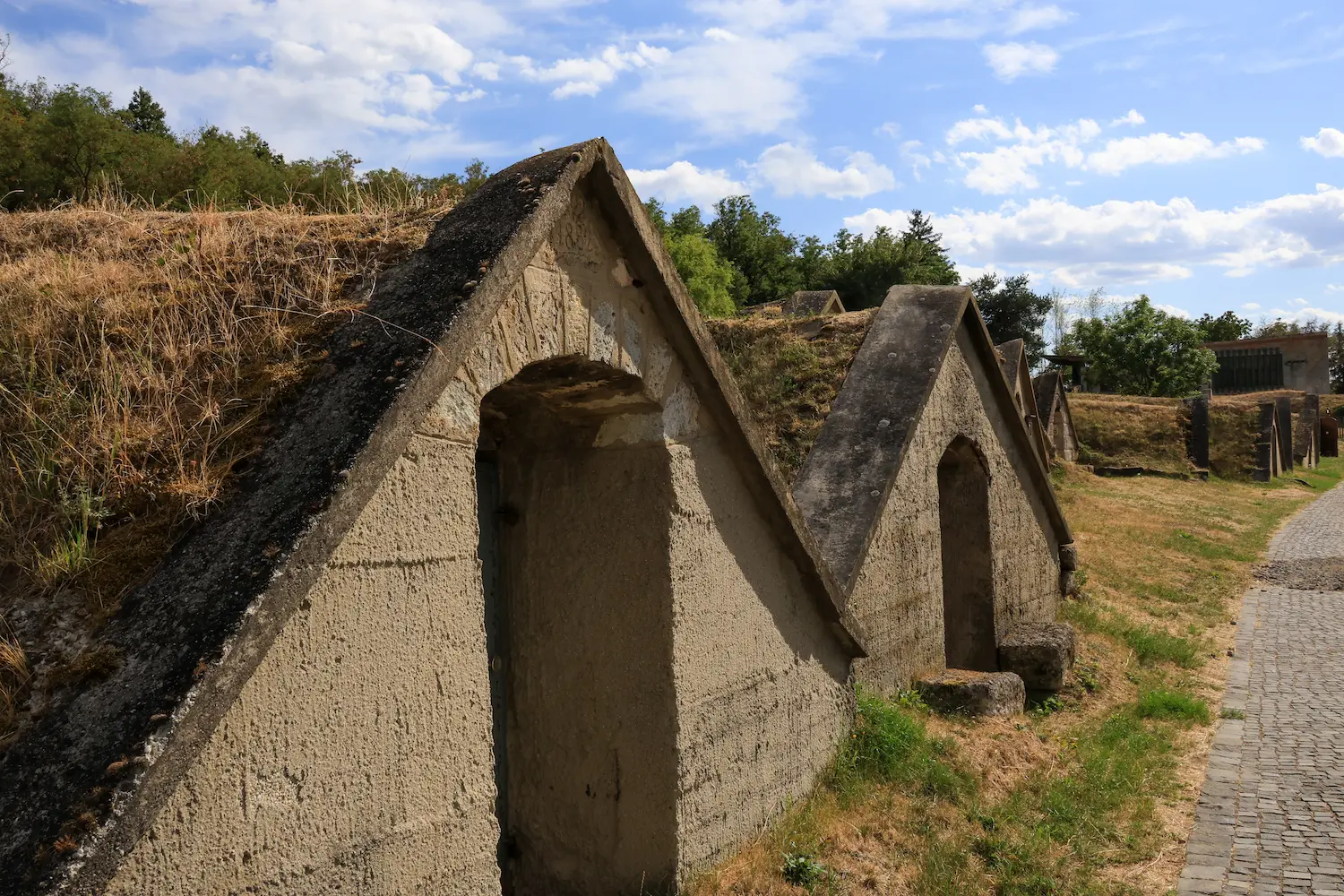
 Session 4
A. Vine and Wine Cultural Heritage. B. Wine tourism and regenerative wine tourism
Read more →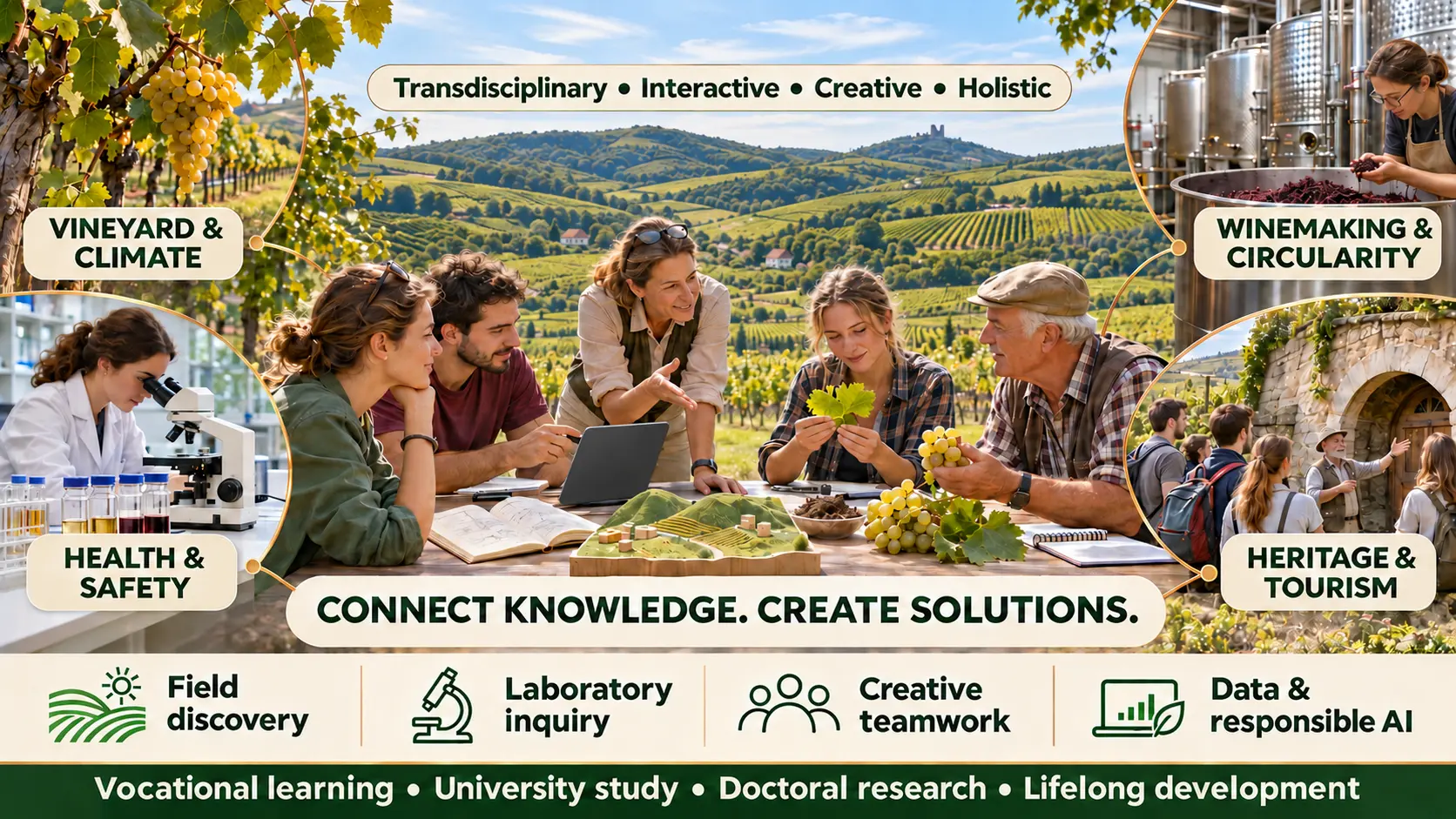
 Session 5
Transdisciplinary, interactive, creativity-based and holistic learning
Read more →Each contribution should identify its main research question, evidence, intended application and relevant connections to other sessions. This provides a common language without removing disciplinary depth. The by-product pathway below assigns a scientific lead according to the question being investigated.
The lead follows the application rather than the raw material: the same grape-skin fraction may be examined as a plant elicitor in Session 1, an extraction product in Session 2 or a food ingredient in Session 3. Shared studies should be cross-referenced, with distinct questions and outcomes in each session.
| Lead session | Main responsibility | Exchange with other sessions |
|---|---|---|
| 1 Viticulture | Biomass management; soil applications; plant-protection and elicitor research | Supply origin and field data; receive suitable treated residues and application guidance |
| 2 Oenology | Material characterisation; processing; recovery; product quality and scale-up | Supply traceable fractions and specifications; receive agronomic and health requirements |
| 3 Grapevine Wine and Health | Nutritional, cosmetic and medicinal applications; safety and efficacy | Return exposure, quality and evidence requirements to field and process researchers |
Begin with a problem jointly framed by researchers, students and practitioners. Gather field, process, health and community evidence; compare alternative responses; create and test a solution; then evaluate the result and return lessons to every participating session. This cycle makes education a two-way process of knowledge creation and application.
Illustrative shared challenge. Design a circular vineyard and winery visitor experience. Session 1 assesses soil and biomass needs; Session 2 proposes feasible processing; Session 3 checks ingredient and health claims; Session 4 combines heritage interpretation, direct sales and stewardship. Session 5 turns the evidence into a collaborative learning project with assessable outcomes.
Develop concise session syntheses, comparable case studies, reusable teaching materials and a jointly prioritised research agenda. A common case-study record should include the place and system boundary, methods, baseline, outcomes, uncertainties, resource requirements and potential users. Where possible, report environmental, cultural and social outcomes alongside financial feasibility.
The follow-up conference on wine economics, scheduled for 8–11 June 2027, can use these technical findings, cost categories and implementation constraints for a detailed appraisal. This preserves a focused scientific programme while maintaining continuity between scientific evidence and economic decision-making.